Showing posts with label affordable housing. Show all posts

Monday, March 21, 2016

Inaugural Bankers Breakfast a Success!


Networking opportunities abounded for local bankers who were in attendance at our Inaugural Bankers Breakfast. 
AT UHI, we feel it is important to acknowledge folks for their contributions and passion for investing in our work. Recently, we had the chance to thank a group of Memphis businesses and business people who make a real impact on what we do: community-oriented bankers. You can see how great it went here. Our guests enjoyed a nice breakfast spread while Board Members Keith Turbett, Teresa Cheeks-Wilson, and Mike Fearnley--and founder and Executive Director Tim Bolding--shared a little about the impact United Housing has on economic development in Memphis.

We gave out ten awards; recipients included Landmark Community Bank, Paragon, Pinnacle, Community Mortgage, Iberia, Mortgage Investors Group, and Prime Lending. We also recognized an individual banker from Landmark--David May--for his extensive community development work. Our team saw it as an opportunity to give much-deserved recognition to this community for their hard work in Memphis. It was also a good time to let them know they can join UHI committees (any committee, not just Finance) and that they are likely to get to see their dollars at work on-the-ground in revitalized Memphis neighborhoods. And since UHI is founded on the principle that nonprofits should generate social enterprise-based fees-for-service, we also proudly plugged our current programs so that the next group of bankers can invest in them the next year.

All in all the Breakfast was a huge success, with people expressing interest in coming to do a site visit to learn more and to join committees. Here's to the start of something beautiful in 2016!


Thursday, February 25, 2016

To Rent or to Buy? Less of a Dilemma with New UHI Loan Package

That is the question. Turns out in Shelby County renting can be expensive compared to owning according to SmartAsset as reported by the Memphis Business Journal.

Key Points:

  • Shelby County is the 6th best place to buy in the state, according to SmartAsset and calculated using an average mortgage rate of 4.5%.
  • "The average monthly mortgage payment in Shelby County was $488 compared to an average monthly rental payment of $1,219."


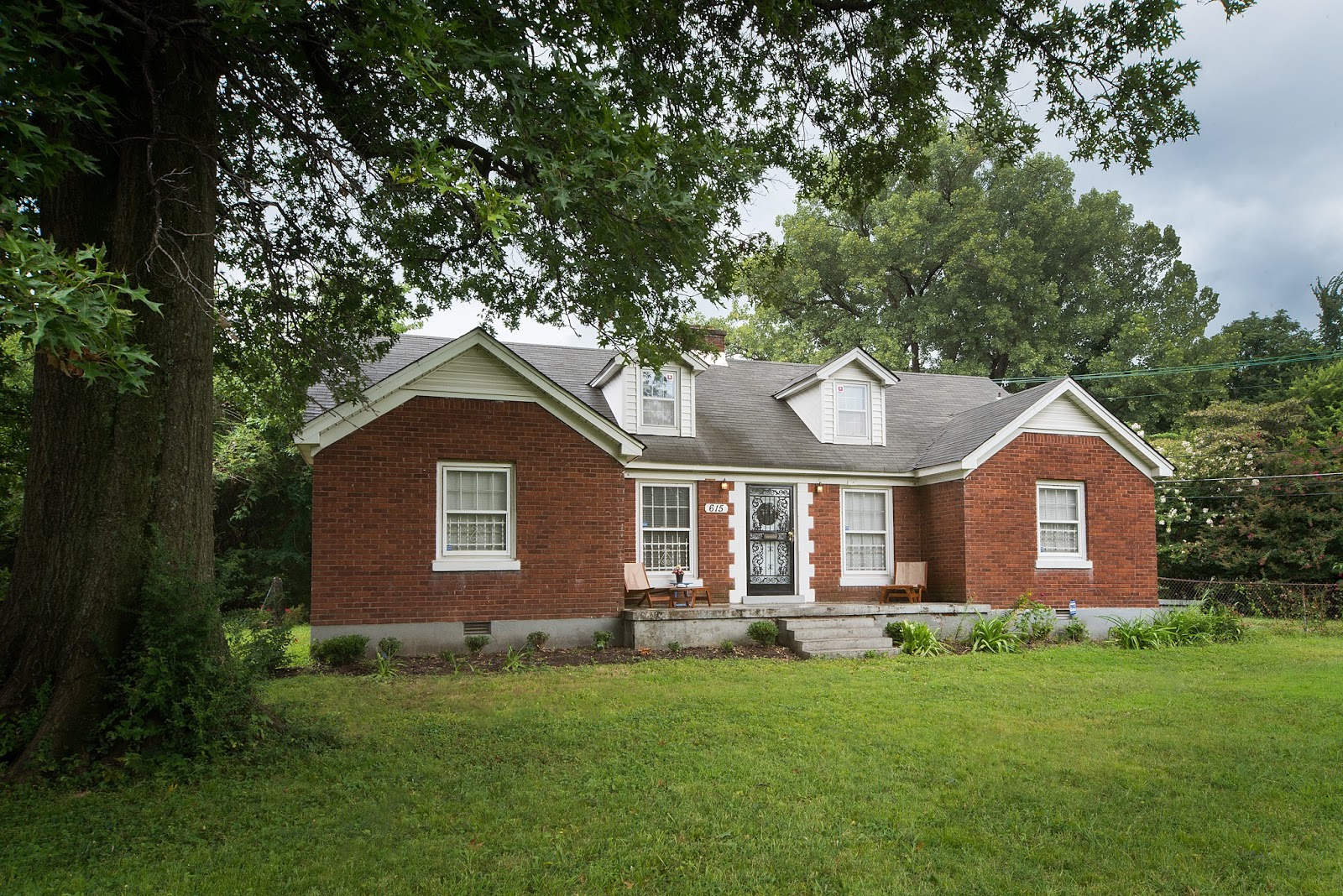
Home for sale at Wolf River Bluffs
Owning a home in Shelby County pays off. Banks and mortgage lenders made 9,368 mortgages in Shelby County last year, up 11% from 2014 according to the Chandler Reports Review. Lenders United Housing works closely with, like Community Mortgage, Magna Bank (now Pinnacle), and Iberia Bank make up the bulk of the mortgages made last year.

While mortgage demand may be growing, there are still many families that are without access to a mortgage. Credit is still a major barrier for many Memphis families, as well as down payment necessary to close a conventional mortgage. After the 2008 crash, millions of families were pushed out of their homes and into rental situations. According to the Commercial Appeal, "about 137,000 metro-area residents are estimated to work two or more jobs, compared to an estimated 40,000 in 2007..." just to be able to afford rent. "Single parents, seniors and the disabled were among the hardest hit along with workers in the food-service industry," and to add to it, the affordable homes were bought in bulk by outside investors for flipping or for rental property - $1 billion worth of homes in Memphis suburbs since 2010, according to the CA.

United Housing offers financial education and counseling as well as a financial product that will help individuals make the leap into homeownership and out of a costly rental situation. Owning a home for less than rent is easier than you may think. Give us a call at 901-272-1122 to sign up for a Homebuyer Education class, credit counseling or for more information on the homes we have for sale at our Wolf River Bluffs subdivision at James Rd. and McLean Blvd. Tell a friend!

The homes are brand new and energy-efficient, with increased indoor air quality through EcoBUILD certification standards. The solar panels will give you an average of $30 savings in energy costs. You can be a homeowner in Shelby County and save money monthly!


Wednesday, January 27, 2016

Employee Spotlight: The Demo Diva and the Operation Home Program

United Housing employee Cherry Brooks, the self-proclaimed “Demo Diva,” has been sorting through houses by the fistful to find ways to alleviate blight in Memphis neighborhoods. Using the National Community Stabilization Trust (NCST) program called The ReClaim Project, distressed properties are donated to nonprofits that are willing and able to take some action on getting the homes either occupied or taken down.

Cherry Brooks, Demo Diva and Housing Support at United Housing

NCST is a nonprofit focused on accelerating neighborhood revitalization across the United States by collaborating with local community development corporations and national stakeholders. ReClaim focuses in markets with low-value, non-performing assets. Memphis is one of these left behind markets and continues to get hit by the housing crisis and economic recession. Property values are not increasing making it difficult for neighborhoods to bounce back.

“So many of these homes have to be knocked down, they are in such bad shape,” Brooks said sifting through piles of photos of homes with no doors, rotten structures, falling roofs, and water damage beyond repair. A vacant lot donated to the next door neighbors—often schools, churches, or homeowners—will help to maintain the lots and is one strategy for some of the homes.   “I drive around these neighborhoods, and look around. Find out if a school or church or store would want to maintain the lot, put in a garden or park. If I’m in Frayser I’ll recommend Frayser CDC for the property, especially if it can be saved and renovated,” Brooks says.

Not all of the homes need to be torn down. Some homes can be saved and repaired. “I just showed you the good ones,” Brooks said. The “good ones” can be donated to the neighborhood’s nonprofit community development corporation to be rehabbed and rented or sold to an individual or family. Brooks adds, “But most of them are just not worth the expense.”

Those rare property gems that are salvageable are ripe to become homes for veterans – the population NCST is focusing on getting housed. The donated properties can be “sold at a discount to qualified veterans or service members or made available as mortgage-free homeownership opportunities for disabled or very low-income veterans.”

United Housing is currently developing a new program called Operation Home in partnership with veteran organizations in Memphis like Catholic Charities' St. Sebastian Veteran Services  program, where they transition homeless veterans into stable housing. Operation Home has helped five veterans so far. The goal of Operation Home is to help 25 more veterans and their families become housed using NCST’s donated properties and ReClaim project. Properties that can be saved and renovated using energy-efficient, universal design, can provide accessibility standards for individuals in a wheelchair. Our goal is to supplement treatment plans from partner veteran organizations by providing a very crucial missing piece in the housing options and financial education of veterans in Memphis.

"I have 45 properties right now I am requesting through NCST," Brooks adds, "let's hope we can get some of these back in shape."


Thursday, January 14, 2016

Renewable Energy in Memphis


Solar panels at Wolf River Bluffs.

Local solar panel enthusiast, Fergus Nolan, has written a short piece on Facebook on United Housing's Wolf River Bluffs. 

If you roll northwards on McLean, you dead-end at James St in Frayser. Clustered around the intersection, there's an interesting project by United Housing, a non-profit which works with low-income housing. These houses are very cool, built to pretty good standards of insulation, with economical on-demand water heaters, and each has a set of eight solar panels on the garage roof.
The panels were made in Memphis by Sharp America, who have since stopped making solar panels in Memphis. The economics of the panels are attractive. The eight panels probably have a rating of just under 2000 watts, which means that, with an average of 6 hours of productive daylight, you'd expect to get something approaching 12 KWH (12 units on your utility bill) per day. This is worth about $1.20 off your bill per day, maybe an average of 35 bucks or so, and this is higher in the summer months when the AC is on. 
There are still some tax incentives, in the shape of a credit, for installations like this, and you may qualify for some installation grants also. If you get a TVA/MLGW grid tie, you might be able to sell the energy to the utility for a higher price.
To build an installation like this yourself, you'd need approximately $2000 worth of panels, a solar controller in the $500 to $800 range and an inverter, to convert the 24V DC to alternating current, like you get off the mains. A 2000 watt inverter might start around $400 to 500. Then there is a mess or wiring, connectors and mounts, and you will need to hire an electrician if you want to hook it up to the grid, or contact the utility and jump through their hoops.
A grid this size won't power your home, but every watt you generate is a pile of coal they don't get to buy from Duke and burn at the Allen Fossil Plant, and thirty-something bucks per month is better than a poke in the eye with a sharp stick.
Payback looks to be in the order of 10 years and the panels come with a 25 year guarantee. There are a few little perks, such as the 'parasol effect' where the panels block 20% or so of the sun's heat. Mostly, doing a starter installation like this puts you in a good place to add more. Prices for panels have been in a historical decline, and fossil fuel will inevitably go up, so, at some point, you'd expect to be able to build up your home solar farm at incrementally lower costs. And, if you carefully research all the available grants and tax incentives, you may be able to trim these costs significantly.
The van in the pics is my solar-powered freezer truck, also with 1 KW of Memphis-built solar panels. This is how I have avoided tangling with bureaucracy as it is an off-grid installation. For anyone who has mobile power needs, the fact that automotive energy is much more expensive than grid power, and much of the available devices are awfully fuel-inefficient, gives a much better ROI calculation. Payback on the solar part of the truck conversion was less than a year. Opportunities for renewable energy are all around us. There is plenty of low-hanging fruit for homeowners and business folk who need to make our energy investments go to the bottom line.
United Housing has shown the way. These are neat and efficient houses that look very livable, probably much better than these leaky old Midtown houses. BTW is you know any low-income folks, it looks like some of the houses are still for sale.


Mr. Nolan is a member of local Facebook Advocacy group, Midtown Sustainability Alliance. He operates a small business based here in Memphis.


Learn more about Wolf River Bluffs on our website.


Monday, November 16, 2015

What is Giving Tuesday?


On Tuesday, December 1, United Housing is participating in #GivingTuesday, a global day dedicated to giving. 

Last year, more than 30,000 organizations in 68 countries came together to celebrate #GivingTuesday. Since its founding in 2012, #GivingTuesday has inspired giving around the world, resulting in greater donations, volunteer hours and activities that bring about real change in communities. We invite you to join the movement this December.


Why give to UHI?

Through our services, more than 300 people have become successful homeowners per year, leading to more stable homes and neighborhoods. You might already know that United Housing increases access to homeownership, helping more individuals become homeowners. But did you know how that affects our city, making Memphis and the Mid-South a better place?

Your dollars will go further with UHI.
Investment leverages private capital. UHI leverages your dollar $500 to $1 through stimulating the economy via real estate and the lending market.

UHI builds and rehabs housing for other nonprofits, including SRVS and Meritan, who provide medical residential housing to seniors and people living with disabilities.
UHI has provided more than 60 individuals with disabilities a safe, accessible place to live through partnerships with SRVS and Meritan, Inc. – mostly through accessible construction – like wheelchair ramps, accessible bathrooms, and entrance and exits.

UHI strengthens Memphis neighborhoods.
We are a stabilizing force in the local economy – we’ve been here for more than 20 years, helping more than 4,000 families save or buy a home. Our organization has had a $400 million impact on Memphis and Mid-South.

UHI is focusing on US Veterans.
Recently, United Housing helped five veterans have a safe and affordable place to live through Operation Home. Help us assist more veterans and give to UHI today!

Where Should I Give?

You can give to UHI by visiting http://www.uhinc.org/home-24/2012-10-31-17-32-37. #GivingTuesday is held annually after Thanksgiving (in the U.S.) and the widely recognized shopping events Black Friday and Cyber Monday. The day helps kick off the holiday giving season and inspires people to collaborate in improving their local communities and to give back in impactful ways to the charities and causes they support. Also, qualifying employees can have their employers match their giving! Check back on our pages after November 17 to see if your employer will match.

Those who are interested in joining United Housing’s #GivingTuesday initiative can visit

For more details about the #GivingTuesday movement, visit the UHI page on #GivingTuesday website (www.givingtuesday.org), Facebook page (https://www.facebook.com/GivingTuesday) or follow @GivingTuesand the #GivingTuesday hashtag on Twitter.


Wednesday, August 19, 2015

United Housing & St. Therese team to provide home for women


Landmark Community Bank Offers Low Interest Loan To Facilitate Purchase


When St. Therese of Lisieux – the “Saint of the Little Way” – said more than a century ago that people in distress could be saved by small acts of kindness, she may not have been thinking about food and shelter for women who are survivors of trauma and homelessness. But a Memphis non-profit has used the teachings of the Little Flower, as St. Therese is known, as an inspiration to build community with and for women who are looking to rebuild their lives after being on the streets.


And when the Memphis-based Community of St. Therese of Lisieux approached United Housing, Inc. (UHI) in need of space for three women in transition, the message resonated. Thanks to a partnership with the Lisieux Community, UHI, the Presbyterian Women (PCUSA) and Landmark Community Bank, those women now have a safe place to live as they work to get back on their feet.


“We participated in the national Community Stabilization Trust program that resulted from the settlement with the major national banks affected by the financial crisis. The banks provided foreclosed properties to non-profits like UHI for use as affordable housing,” said Amy Schaftlein, director of development and communications for UHI, a non-profit affordable housing agency that serves families in the city of Memphis, Shelby County and West Tennessee. “When organizations like St. Therese have a need, those properties could be fixed up and rented for a dollar a year for two years with an option to purchase, and meanwhile address a critical social challenge.”


Lisieux Community President Sandra Ferrell says a grant from the Presbyterian Women (PCUSA) allowed her organization to take the next step, not only purchasing the house but also making needed renovations. Landmark Community Bank in Memphis provided the low-cost loan through a state-level community reinvestment program.


“A foreclosed house had been sitting vacant for years, and now these three women have a home. It’s such a wonderful partnership of local and national organizations working together to make a difference on several levels,” Ferrell said. “Many times, people who find themselves on the street never learned to live as part of a family, and we help provide them with education, life skills, employment assistance and other programs. As St. Therese taught, we can do small things that add up to mean a lot to these women’s futures.”


Now two of the participants are starting at Southwest Community College, and everyone involved has felt the impact. Landmark Community Bank Senior Vice President Bryan Jones says the bank selects opportunities to support local non-profits each year.


“This initiative has such a direct impact on Memphians who desperately need the help and want to get back into society,” Jones said. “We’re blessed to have organizations like United Housing and the Lisieux Community in our midst, and Landmark Bank was honored to play a small role in connecting the dots and offering the financing that provided a stable home.” 

The home has a capacity for five women to participate in the two-year program. The Lisieux Community has made tremendous strides in helping women transition back into the workforce and community. For more information, visit www.lisieuxcommunity.org.

Friday, July 17, 2015

UHI Intern Paves Path for Youth Financial Literacy Program

Through Teach for America, Lukas Alfen has worked as a geometry and science teacher at Woodstock Middle School in Millington, Tenn., for the past year. In January, Lukas reached out to UHI Executive Director Tim Bolding about financial literacy for youth programming. The meeting resulted in Tim Bolding speaking to Lukas' class on financial literacy for youth. Following the presentation, both Lukas and Tim were surprised by the lack of knowledge these students had on money management.

"After discussing, Lukas and I came to the conclusion that the best way to create and nurture the homeowners of tomorrow is to develop the money management and financial literacy skills in children today," said Tim. "Knowing that Lukas would be a great asset to our team, I offered him a summer internship to exclusively focus on developing a UHI youth financial literacy program. We were thrilled when he accepted."


For the past two months, Lukas has been developing the foundation of this program, titled United Housing for Youth (UHY), through research and networking with community partners. He has strengthened and developed relationships between UHI and several organizations that are enthusiastic about the initiative.

"The dialogue surrounding financial education is gaining momentum, and I hope this program is a step in the right direction," said Lukas. "More awareness will lead to more action and a brighter future for the next generation."

UHY consists of different financial literacy lessons that are meant to be easily facilitated by a teacher or professional visiting a classroom. Additionally, UHY will give facilitators access to relevant and quality extension activities, including programs developed by EverFi, which is the leading education technology company focused on teaching, assessing, badging and certifying students in critical skills.

"My hope is that UHY helps bring more attention to the lack of and need for financial literacy skills in our community's children," said Lukas. "Often times, financial issues that adults face could be prevented had they learned the proper skills as children. I'm confident this program can help correct some of these trends."

Interested in ways you can support this new initiative? Email us through our website using subject line UHY at http://www.uhinc.org/home-19/home-25, or call Amy Schaftlein at (901) 728-6937.

Friday, April 24, 2015

Financial Literacy for All

Getting Started in Financial Literacy

Did you know that the month of April is National Financial Literacy Month? Priscilla Reed, Special Projects Coordinator at United Housing, Inc., shares her knowledge as a certified financial capability counselor in the following blog post.
Priscilla Reed, MBASpecial Projects Coordinator, United Housing, Inc.

With a background in foreclosure prevention, I help people save their homes using many different tools, but one of the most important tools is building a monthly budget. During my time at United Housing, I have found that the basic rules of budgeting and spending are the same at various levels of financial health. Because of this, I am able to communicate and help people from all walks of life. I encourage you to read on in order to see what I've included in the essentials of financial literacy. President Obama declared April Financial Literacy Month in 2011, saying, “I call upon all Americans to observe this month with programs and activities to improve their understanding of financial principles and practices.” (www.whitehouse.org)

It is very important to achieve and maintain financial solvency.  Being financially literate helps you build savings, improve credit and eliminate debt.  On the contrary, as I have seen with past clients, the absence of financial literacy can cause a consumer to build no savings, increase debt and develop poor credit.  In addition, it can negatively affect health and is a known cause of divorce. Now that we have looked at the pitfalls of lacking financial knowledge, let’s look at how we can better achieve it.
What Is Financial Literacy? 
Financial literacy is the ability to understand money and make sound monetary decisions. According Investopedia, financial literacy also "involves intimate knowledge of financial concepts like compound interest, financial planning, the mechanics of a credit card, advantageous savings methods, consumer rights, time value of money, etc.” (http://www.investopedia.com/terms/f/financial-literacy.asp, 2015.)
Get To Know Your Spending Habits
The first step of being financially sound is tracking your spending, which can also be one of the most challenging tasks.  It is very important to know what is earned and what is spent in order to increase savings and avoid debt.  How do you avoid overspending?  Create a budget.  If you don’t like the word budget then develop a “spending plan.”  A spending plan allows you to track what you spend and save. Yes, savings is an expense. If you treat it as an expense, then you will be sure to pay yourself.  Once you’ve established a budget or spending plan, you must periodically check it to ensure it's functioning properly and make necessary adjustments. 
Identify Needs vs Wants
On your road to becoming more financially literate and healthy, be mindful of the differences between needs and wants. Before making a purchase, ask yourself, “Is this a need or a want?”  You may have to step back from a purchase to think about it.  Although habits are hard to break, it can be done. It may take a few months to get into a good financial pattern and reap the benefits, but the important thing is to stay focused and determined.
Remember, no matter where you are in the process of financial literacy, the ultimate goal is to become financially capable.  National Financial Literacy Month is a great time to start!

Monday, March 30, 2015

People and Places Conference Part III: Health and Housing


This is Part III of a series by Staff Blogger Amy Schaftlein, Director of Development + Communications at United Housing.

Last week I wrote about how Memphis can learn from D.C.'s Housing Production Trust Fund Baseline Funding Act to mitigate population loss and blight in our city. Blight, poor housing stock and vacant properties also pose health threats for many families, and relying on local government funding cannot alleviate all issues associated with unhealthy living situations. This post delves into how Community Development Corporations (CDCs) can partner with the health sector to have a bigger impact in our neighborhoods.

For too many communities and families, zip codes determine health. The People and Places Conference session entitled, "Engaging the Health Sector," asked the question: How can the community development field work with the health sector in a more collaborative way to alleviate ills associated with poor housing, unsafe neighborhood conditions and other neighborhood-based issues that plague American communities? The Federal Reserve Bank of San Francisco convened a HealthyCommunities Conference and invited other banks to invest in CDCs working with the health sector to decrease health issues faced by low-income communities and give the banks CRA credit at the same time. 

Shelterforce Panel (photo courtesy of Shelterforce)


Last week, United Housing visited Jackson, Tenn. to join in discussions with the state of Tennessee's Medicaid program, TennCare. TennCare's Money Follows the Person program is a Rebalancing Demonstration Program that focuses on transitioning long-term care systems and institutionalized elderly and disabled into homes in the community. Tennessee saves $41,000 per person they move to care in a community setting and out of a institutional care. TennCare called a Stakeholder Meeting in Jackson to get feedback and input on how Tennessee should spend the saved dollars in the Rebalancing Fund. 

Affordable Housing, potentially development and rehabilitation grants to assist in the purchase and accessible rehab of a home, were among the opportunities proposed. Nonprofit Housing developers will be the targeted agencies to receive this type of funding. Another, a cheaper and quicker solution is a proposed voucher program that will give priority to elderly and disabled folks without the support system to use vouchers to transition into the community - temporarily - for 2-5 years. The group wanted to make sure that the housing developments were coordinated with the Tennessee Housing Development Agency's monitoring capacity. While none of the proposed rebalancing funds are confirmed nor fully defined, it is one step toward a model for healthcare and housing to work together on a larger scale for a healthier future for Tennessee. The amount of funds available are not yet being shared.

United Housing is looking to continue partnerships with other service agencies locally, like Meritan, Inc. and Shelby Residential and Vocational Services (SRVS) to ensure quality, accessible home renovations for their customers transitioning into home care and community-based solutions. As a growing part of our housing development, partnerships with health insurance providers and healthcare agencies will be critical for the future of our housing development work.

Open House at United Housing's Wolf River Bluffs home for SRVS' customer.

Other examples of CDCs working with the health sector from the conference include:
·         Partner with Health Insurance Providers - how we can decrease costs by practicing mold abatement, for example.
o   Add housing needs as part of intake in health clinics
·         Healthy Foods financing with grocers in communities
·         Consult Health Facilities on tax credit opportunities (Do insurance companies have a tax burden that could warrant a Community Investment Tax Credit type incentive program?)
·         Coordination of affordable housing units with health clinics and services. For example, including a mental health liaison in permanent supportive housing units.
·         Look at nonprofit hospitals’ target areas and see where those areas overlap with CDCs' – then create something like ArizonaHealthy Communities
·         Partner with university hospitals
o   For example, APM in Philadelphia partnered with Temple University to inform Sustainable Communities initiative
·         Set up training workshops like Pennsylvania Associationof CDCs did with Jefferson University Hospital and Department of Health and Human Services

It will continue to be important to show how the impact of our work, as CDCs, affects health outcomes in our communities. By showing how our work addresses health disparities, we can more effectively influence policy and attract partners in hospitals and health clinics. It is an exciting time in community development and with the new community benefits obligations many hospitals have due to the Affordable Care Act, it could have as big of an impact on the community development sector as the Community Reinvestment Act (CRA) had in the 1970s.


Friday, March 20, 2015

United Housing Offering FHA Mortgage Refinance Opportunity


United Housing is offering refinances on all 30-year Federal Housing Administration (FHA) mortgage loans obtained after April 18, 2011. In early January, The White House announced the reduction of annual FHA mortgage insurance premiums by 0.5%, from 1.35% to 0.85%.

“The FHA’s streamlined refinance should allow for a smooth and quick transition to lower our customers’ mortgage insurance premiums,” said Priscilla Reed, Special Projects Coordinator at United Housing. “The little work required up front will in turn save borrowers approximately $80 per month, or about $900 per year, depending on where you live.”


For a borrower to obtain the FHA refinance through United Housing, they must have the following:
  • A credit score of 580 or greater.
  • An FHA mortgage for at least six months between April 18, 2011 and December 31, 2014.

A borrower does not need to have an appraisal or income documentation, as there are no income limits, and all fees will be added back into the loan amount. Additionally, the borrower must provide the following:
  • Copy of Note
  • Copy of the most recent mortgage statement
  • Copy of the payoff or demand statement
  • Note: Additional documents may be required.

Once United Housing obtains the borrower’s information, the organization will send it to its lender partner and fellow NeighborWorks America organization, Chattanooga Neighborhood Enterprise (CNE). A team at CNE will pull credit, providing the borrower pays the credit check fees, and then the loan will be processed. The borrower will then close with a local attorney to complete the process, which should take about 10 days.

According to the White House report, in addition to saving people an average of $900 annually, the FHA is projecting that more than 800,000 borrowers will take advantage of these lower rates in the first year alone. The lowered premiums will create opportunities for 250,000 new homeowners to purchase a home over the next three years. New home buying activity will spur more residential construction and new jobs in the housing sector, further strengthening the market. Learn more in The White House release here.

Visit the links below for more information on the FHA refinance opportunity.


Thursday, March 19, 2015

People and Places Conference, Part II - How Memphis can learn from Washington's Housing Trust Fund


This is Part II of a series by Staff Blogger Amy Schaftlein, Director of Development + Communications at United Housing.

Hi everyone, if you've had a chance to look at last week's post, I talked about attending the People and Places conference in D.C. in early March. I am following up with you this week on the work that is being done across the country to fund housing development in tough neighborhoods. One thing I found striking is the amount of money the city of D.C. has invested in their housing production. 


The Coalition for Nonprofit Housing and Economic Development is a member association that leads nonprofit CDCs in ensuring that low-income residents have housing opportunities in the District of Columbia. The Coalition advocated for the creation of the Housing Production Trust Fund (HPTF), and since 2002, the HPTF has produced or preserved over 8,000 affordable homes.

In 2011, the Coalition started a Housing for All campaign to create solid streams of revenue for the HPTF.  The Coalition trained residents to speak out for affordable housing, mobilized supporters and challenged government officials to take action. Over the last two budget sessions, the Coalition won nearly $200 million to fund the HPTF of D.C. This is a huge feat. The strategy did not include identifying one dedicated revenue stream. Instead, they focused on raising a dollar amount that is not dependent on a fluctuating, dedicated source or one-time investment. The HPTF Baseline Funding Amendment Act of 2014 was passed supporting $100 million annual baseline funding for the trust fund, a miraculous win.

As Memphis begins to plan for housing needs in 2016 and beyond, a dedicated funding amount for housing will be extremely important to combat deteriorating housing stock and property values across the city. 

Memphis is losing population, and with that loss, we lose revenue and investment. Based on U.S. Census numbers, at least 80,000 more people moved out of Memphis than moved in between the years 2000 and 2010. Tipton County homes sales are up 48% from 2014. People in the middle-income range are moving out. They leave behind vacant homes that cost government and homeowners money. There is an estimated reduction of value of $1,058 for each house within a 1/8 mile radius. Abandoned properties cost local governments $20,000 per house for lost taxes, increased police and fire calls, and public works, code enforcement and safely problems.

A strategy to increase investment in our older, existing neighborhoods is necessary if we want to grow our tax base, decrease blight, support local businesses and attract outside businesses to our city. A Housing Trust Fund or dedicated funding stream for housing initiatives, and/or tax abatement strategies with strategic and committed investment from our local and state governments, are a few things that will help Memphis mitigate population loss, increase investment in our older, existing neighborhoods and help to stabilize losses in property values and tax revenues. 


Monday, March 9, 2015

A Look into the 2015 People & Places Conference in Washington D.C.


Hi, I'm Amy Schaftlein, Development and Communications Director at United Housing. Last week, I was fortunate enough to attend the People and Places Conference in Washington D.C. thanks to our partner organization, Livable Memphis. Livable Memphis sent me on a scholarship as an employee of United Housing, a member organization, and board member. I attended seven sessions covering housing and community development policy and advocacy and will share with you insights on these sessions through a lens of both a UHI employee and a volunteer on Livable Memphis board and Policy Sub-committee. 

The conference focused not solely on what organizations are doing, but how organizations are working with residents, neighbors, youth, elderly and immigrant families to strengthen communities. As the Massachusetts Association of Community Development Corporations (CDCs) said, the residents and stakeholders have agency and are active participants in creating and sustaining parks, gardens and small businesses in traditionally forgotten neighborhoods. This conference saw community development practitioners not only as those employed at nonprofit and community development organizations but also as those living and working in neighborhoods every day - volunteering at community gardens, schools, and in advocacy campaigns in their cities. 

People & Places has boasted that they are the most diverse and inclusive conference in more than a decade and there is evidence of that on every panel and in every discussion from talks on racial justice, to tackling issues facing immigrants in America today. 


To the right, John Paul Shaffer with Livable Memphis presents on creative placemaking and tactical urbanism as innovative approaches to neighborhood revitalization.

Speakers from leadership position in government included Deputy Secretary of Labor, Christopher Lu, at the Thursday breakfast event. He spoke about wage equality and doubling apprenticeships not only in manufacturing but also in the information sector, to help families increasing their education and earnings. At lunch, Assistant Secretary of Commerce for Economic Development, Jay Williams, noted a startling statistic, “While our production numbers are back to what they were in 2008, we got there with 1 million less workers.” That statement says a lot about our economy. Yes, it is getting better, but families are not feeling it because many are not contributing to it. 
Assistant Secretary of Commerce Jay Williams with Steve Glaude, Executive Director of  the Coalition of Neighborhood Housing and Economic Development. Photo courtesy of @CNHED.
Over the next several weeks I will share three takeaways I had from this conference. One, as community development practitioners, we should continue to find ways to incorporate the health sector in our work. Secondly, if Memphis wants to invest locally in our housing stock, one option may be to create a Housing Trust Fund and finding ways, locally to sustain it like the D.C. organization, Coalition of Neighborhood Housing and Economic Development proposed in their virtual tour. Finally, in order to strengthen neighborhoods, building the capacity of our community to advocate for local public policies that work in their neighborhoods will be central to creating the kinds of political will and buy-in necessary to fund a Housing Trust Fund and other funding and legislation that will help build community.


Thursday, January 22, 2015

Wolf River Bluffs Selected as Finalist in MBJ’s Building Memphis Awards

Finalists for the Memphis Business Journal’s third annual Building Memphis Awards have been selected by the editorial staff and a panel of independent judges will choose the winners in each category.

In addition to six project categories, judges will select a “Best Sustainable Element” from all of the finalist projects and determine an overall “Project of the Year.”

Our Wolf River Bluffs development has been chosen as a finalist in Best Public Private Project: Small Category. Click here to learn more about the program’s mission to highlight various local professionals who collaborate to develop impactful projects in our city.

Wednesday, November 19, 2014

Tamika Walker Feels Right at Home in Wolf River Bluffs House


We’re excited to share that we have our first homeowner in the Wolf River Bluffs development: Tamika Walker! Tamika was able to purchase her very first home after completing Homebuyer Education classes, and she and her family moved in on July 14, 2014.

Tamika has lived in the Memphis area for more than 20 years, but she had never fulfilled her dream of owning her own home, until now. Over the past few years, she has worked hard to build her credit and researched all the steps to become homeownership ready. While busy completing these steps, Tamika had her eye on our Wolf River Bluffs development and dreamed of buying a home there one day. Now that dream is a reality, and Tamika does not take her home for granted.

“It’s great just walking up and down the subdivision and feeling safe in my own neighborhood,” said Tamika. “As a mother, it means the world to have a roof over my two daughters’ heads. One of my top priorities in owning a home is to show them how important it is to have something that belongs to you, which you can take responsibility for and have pride in.”

While enrolled in our Homebuyer Education class, Tamika gained insight into all of the items she needed to bring to the table in order to buy a home. Furthermore, Sharon Walker, our Homebuyer Education Manager, personally assisted and counseled Tamika throughout the home buying process.

In addition to finding a place that she and her family could call home, Tamika was interested in finding a house that was environmentally friendly. Sharon explained to Tamika that the homes in our Wolf River Bluffs development, which she had her eye on, are MLGW EcoBUILD certified and feature solar panels, which conserve energy and cut utility costs. After hearing this, Tamika was sold on living in Wolf River Bluffs.

“The eco-friendly component was a major factor when I was choosing a home,” said Tamika. “My utilities in the past were so costly, and I have already seen a huge difference in my bill while living in this house. Everyone always asks me about living here, and I tell them it’s the best thing I’ve ever done.”

Start the below video at the 2:45 minute mark to watch Tamika tell her story. 


For more information on the Wolf River Bluffs development, please contact Anne Meadors at (901) 272-1122.